
With amendment 4 of the BS7671 being published in April 2026, various modifications to current regulations have been announced regarding medical locations. BS 7671 is the national standard for UK electrical installations, but designers, installers, and maintenance providers of medical locations should also review the Health Technical Memorandum (HTM) are utilised by the NHS and adopted by some FM companies working in the health sector. The requirement for Equipotential Bonding Busbars (EBB) inspection and testing has not changed and is not something that is new, amendment 4 of BS7671 has described the requirements in a more explicit manner.
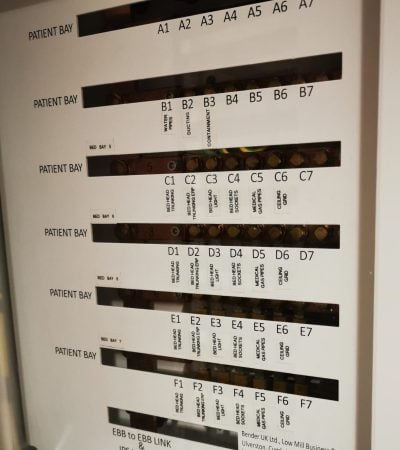
An Equipotential Bonding Busbar acts as a central connection point for supplementary protective equipotential bonding conductors within medical locations. These conductors connect exposed metalwork, services, and socket outlets with an aim to to reduce touch voltages and minimise the risk of electric shock.
EBBs are a mandatory requirement in Group 1 and Group 2 medical locations, where applied medical equipment is in use and patient risk is higher.
Electrical safety in medical environments is critical. Patients are often more vulnerable to electric shock, and the consequences of electrical failure can be severe. Equipotential Bonding Busbars (EBBs) play a vital role in managing this risk by ensuring all exposed conductive parts and socket earths within patient areas are maintained at the same electrical potential.
Guardian Electrical provides specialist inspection and testing of EBB systems in medical locations, supporting duty holders in meeting the requirements of BS 7671 Section 710 and the latest Amendment 4 of the BS7671.
Historically, EBB testing has often been omitted from routine inspection regimes, particularly where specialist contractors maintain medical IT systems. This creates a significant compliance gap for Dutyholders.
Amendment 4
Amendment 4 to BS 7671 (effective April 2026) strengthens and clarifies Section 710 requirements. Key updates include:
- Clearer wording, making reference that other documents may need to be consulted (HTMs)
- Explicit requirement for end-to-end resistance testing of supplementary bonding conductors
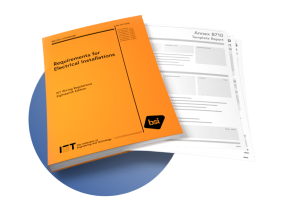
- Introduction of Annex B710, a standardised template report for EBB inspection and testing
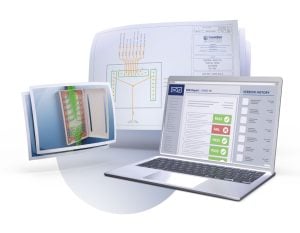
- Improved clarity around documentation, diagrams, and record-keeping
For the first time, Amendment 4 sets a clear benchmark for how EBB compliance should be evidenced.
Section 710 introduces additional inspection and testing requirements beyond a standard Electrical Installation Condition Report (EICR). These include:
Annual (Group 2) verification of supplementary protective equipotential bonding
Measurement of end-to-end resistance of bonding conductors
Verification of EBB connectivity and labelling
Accurate records, schedules, and diagrams of connected conductors
Medical Locations
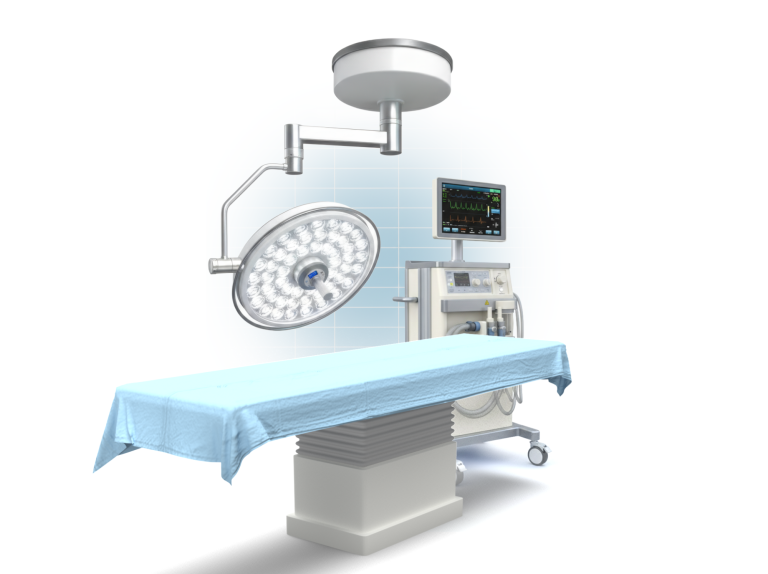
Medical locations are classified into Group 0, Group 1, or Group 2, depending on the level of patient risk should an electrical fault or supply failure occur. This classification directly affects the earthing system, bonding requirements, and inspection and testing obligations. Correct classification is essential and should be agreed with clinical staff for new installations or assessed carefully in existing premises.
Definitions within the BS 7671 are as follows:
Medical Location – Location intended for purposes of diagnosis, treatment including cosmetic treatment, monitoring and care of patients.
Applied Part – Part of medical electrical equipment that in normal use necessarily comes into physical contact with the patient for medical electrical (ME) equipment or an ME system to perform its function.
Group 0 Medical Location – Medical location where ME equipment or ME systems are not intended to be applied and where discontinuity of the electrical supply does not represent a risk to the safety of the patient.
Group 1 Medical Location – Medical location where ME equipment or ME systems are intended to be used externally or invasively on any part of the patient and where discontinuity of the electrical supply does not represent a risk to the safety of the patient.
Group 2 Medical Location – Medical location where ME equipment or ME systems are intended to be applied for treatment or diagnosis of a patient and where discontinuity of the electrical supply represents a risk to the safety of the patient.
Once medical locations are determined on site, the appropriate testing program can be created. An example of group classifications can be seen in Annex A710 of Section 710.
They apply to a wide range of facilities, including:
-
Hospitals
-
Private Healthcare Facilities
-
Dental & Medical Facilities
-
Healthcare Centres
-
Medical Rooms within Workplaces
-
Medical Research Facilities involving Patients
Scope of Works
Based on the latest Amendment 4 requirements, Guardian Electrical have developed a complete program of works to ensure that all EBBs and associated requirements are tested as per the current British regulations and code of practice requirements.
Regulations within the BS7671 are not retrospective, meaning that even though several amendments have since modified the original Requirements for Electrical Installations book itself, an older installation can still satisfy the Electricity at Work Regulations 1989.
The Guardian scope of testing is divided into two categories, “1st Stage” and “2nd Stage”. Although regulations regarding the testing and maintenance of Equipotential Bonding Bars have always existed within the BS7671, the requirements have changed, and a focus has been heavily placed on Part 7 – Special Locations.
Why Choose Guardian?
Proactive response to BS 7671 Amendment 4 clarification
Demonstrable understanding of HTM 06-01/06-02
Medical-location specialists with structured methodologies
Clear, defensible documentation supporting Dutyholder assurance
EBB inspection and testing may not be new in regulation – but it is now explicitly defined, formally verified, and auditable.
Download The Health Technical Memorandum (HTM) 06-01
Electrical services supply and distribution
Read The impact of Amendment 4:2026 on the 18th Edition of the IET Wiring Regulations
We're happy to help, contact us today...
To download our Medical case study, please click here.